A letter to Dame Sally Davies: 'Snack Fascism' is dangerous and will not solve child obesity!

Sunday, 13 October 2019

in

Dear Dame Sally Davies,

My name is Charlotte Bateman and I am 18 years old. I am writing this letter in light of your recent proposal to tackle child obesity: a ban of food and drink (with the exception of pure water) on public transport.

It would seem that your final report as chief medical officer has created quite the stir, earning yourself a Marmite legacy among the press, which ranges from 'top doctor' to 'the most deranged of the nanny-state zealots'. And of course, there isn't just the media backlash to contend with; there are the millions of enraged commuters who perceive your suggestion to be as desirable as the prospect of a no deal Brexit. Alas, I am not here to get political nor to shower you with insults. I am merely here to establish the facts.

When I heard about your proposal, my first reaction was to break out into a slow, sardonic applause and think to myself 'oh good, we've reached a real life dystopia'. I mean come on Sally, you have to admit that it sounds like you've been identifying a bit too literally with George Orwell's 1984, rather than basing your ideas on solid evidence, proven by that thing we call science. I don't know if you are aware of this but food is actually a human right, protected under article 25 of the Universal Declaration of Human Rights. Therefore, if we start dictating when people can and can't eat, I think that in itself raises a few red flags, don't you?

It is also worth considering that most commuters do not have time to eat breakfast at home, meaning the train journey to work is their only opportunity. Correct me if I am wrong, but are you insinuating that these commuters should just skip the most important meal of the day? Hmm, that's healthy advice coming from a chief medical officer.

How you intend on policing this snack attack is utterly beyond me. If I whip out a sandwich on the Piccadilly line, will somebody notify TFL police to perform a citizen's arrest for food felony (after all, the station announcement always urges us to 'see it, say it, sort it'. If I start sipping from my water bottle, will I be accosted by sniffer dogs to check the fluid is not 'riddled' with additives or artificial flavours? Alternatively, will it be the bus driver's job to deprive commuters of their morning flat whites because I can just picture how that would go down: some poor, cowering driver being pelted with pain au chocolats and egg McMuffins by a brigade of hangry, caffeine craving passengers. Forgive me for my satire but I think it's time Miss Davies that you woke up and smelled the coffee. The whole thing is a joke. And I don't care if such measures have been effective in Japan or on Mars; the fact that you are even entertaining this half-baked baloney suggests to me that your departure is well overdue.

After reading the article, I then listened to your interview on Radio 4 and naturally, my open-mouthed amazement turned to clenched teeth rage. As you waffled on and on about the 'flood of unhealthy food' in our midst, I found myself yelling at the radio, shaking with an incredulity greater than that which I felt at the news of Pizza Express potentially going into administration. Why do I feel so vehemently about this, I hear you ask? Because I am fed up of being preached at and I am fed up of being made to feel guiltY.

Ever since my early teens, I became immersed in the online health scene, which ultimately fuelled my body insecurities. At the time, the mantras and doctrines seemed so motivational. But in hindsight, I can see that these gurus were not inspiring me to be healthy. They were coercing me to obsess over my food choices and worry that I was ugly. Luckily, I have the most incredible family who have always promoted a joyous approach to eating and who have helped me to overcome my struggles with mental health. But this isn't about me. This is about the kids of 2019, the kids who are being brought up into an echo chamber of toxic health myths and moral panics about obesity.

Before you jump to conclusions, I am not suggesting that we ignore child obesity. For our children, we must do all we can to protect their health and ensure the best quality of life for them. Where my concern lies is the insensitive and frankly ignominious manner in which our government have approached this situation. As a result of the esoteric reports and conflicting medical data, we have formed a tunnel vision of statistics and percentages. But we have to remind ourselves that these are children we are talking about: young, vulnerable kids who, thanks to the web, have unlimited access to this health obsessed society.

Since Instagram, we have witnessed a sea change in 'wellness' and weight loss culture which has capsized the equilibrium of 'healthy-eating'. Twenty years ago, a balanced diet meant eating a wide variety of foods across all five food groups. But thanks to the never-ending surge of capricious health trends, we've become obsessed with where food is coming from, which foods are good for us and which foods are, so we're told, 'bad' for us. As a consequence of this over intellectualization, the social media diet has been deconstructed by online health gurus and stripped down to the bare minimum. On one end of the spectrum, there are the 'wellness' angels who seem pretty harmless with their virtuous posts about 'clean-eating' and the power of plant-based, (as if butter wouldn't melt- or should I say coconut oil). But then on the opposite end, you have the militant dieters who will stop at nothing to peddle you a cacophony of quick fixes and extreme weight loss plans, all of which are 'guaranteed' to transform your body and transform your life. These Instagram tribes are different but just as dangerous in their ethos. For starters, a study by a team at the University of Glasgow found that 90% of these influencers are dishing out false nutritional claims. Meanwhile, a BBC investigation warned about the prevalence of Instagram content which glamorised eating disorders. The study showed that children and young people were not only being exposed to weight loss images but were also forming their own online peer groups to exchange extreme diet advice.

There is no mistaking it: food anxiety is rising amongst our kids. So surely we would take this into account and navigate the whole child obesity conversation with a bit more caution, right Sally? But no. Instead, the government has gone in all guns blazing, invading the headlines and the education system with their countless health initiatives. And if that wasn't damaging enough to kids, the messages which many of these campaigns perpetuate, are startlingly similar to the narratives of the Instagram health community. Except this time it isn't the unqualified Kylie Jenners and Madeline Shaws who are coercing sons and daughters to worry about their weight. It is primary school head teachers with their lists of restrictions and lunch box policies. It is public health officials who believe it is a good idea to weigh children in school from the age of 4 years old! It is international diet companies who are now marketing to the child consumer demographic. Just look at Weight Watchers' spanking new diet app for kids, complete with its very own before and after shots no less! I mean, how the hell did that even get authorised? The world has gone bonkers and that is why we do not need some other farcical initiative such as a snack ban on public transport to add to the equation.

You say that we ‘should not normalise mindless snack culture'. But is it not worse to normalise food fascism and food shame? What you are overlooking Miss Davies is that children are incredibly perceptive. They will pick up on these customs and attitudes but not necessarily in the way you intend. Drawing on a 2012 study conducted by Levinson and Rodebaugh, there was a clear correlation between negative social evaluations and disordered eating behaviours. Therefore if you are proposing that we deploy judgement and guilt as incentives to stop kids snacking, I can guarantee it will not have the desired effect. All your ban will achieve is increasing children's anxiety about eating in public. And anyhow, what's to stop them from snacking when they are alone at home? Additionally, can we please get rid of this 'mindless' malarkey which you keep referring to? For many people who struggle with their weight, it is nothing to do with the level of will power; rather, it stems from our emotional and mental well-being. Plenty of studies have shown that stress and depression can cause individuals to binge or over eat when they are alone. So one could argue that the stress of being scrutinised in public could exacerbate our emotional eating habits.

You also say that this proposal will create a 'safe' place for children on public transport. I have thought long and hard about this and I am still none the wiser about what you mean. Unless somebody proceeds to use their tuna baguette as a weapon, how exactly would eating on a train be considered 'unsafe' to young passengers? You can parrot the smoking ban example all you like, but food and cigarettes are not the same. Our government illegalised smoking on public transport because of the dangers it poses to other passengers' health. With smoking, we run the risk of inhaling toxic second-hand fumes which can cause permanent lung damage. Whereas, if somebody is eating Pickled Onion Monster Munch on the train, you may have to endure the stomach churning stench, but apart from that, it isn't rendering any untoward symptoms. The fact that a medical professional can even make this comparison is just absurd.

I get you are trying your best, I really do. But this war on so-called junk food will not solve anything. Do me a favour Sally and think back to what children were eating in your day. The reason I ask this is because I suspect children consumed much more sugar during the 60s and 70s than they do today. Back then there were tuck shops at schools to get sweets at break and there certainly weren't any Jamie Oliver types to banish Turkey Twizzlers from the canteen menu. At home, the fruit bowl wasn't exactly brimming with choice due to importation costs; a handful of apples, a bunch of bananas and an orange or two were about your lot. Yet despite the lack of variety, child obesity wasn't an issue. In fact it has only caught our attention within the last thirty years, which means food cannot be the primary cause. Ask yourself what is the most notable change which has occurred between the 20th and 21st centuries? The obvious answer would have to be technology. Just do the maths: increased screen time = decreased activity.

The thing is Sally, you must be an intelligent woman, otherwise how on earth would you have obtained the double title of professor and dame? Even so, I don't need a degree in medicine to tell me that your proposal does not have a leg to stand on. I don't need to be a professor or a goddamned dame to understand that this ban would not make an ounce of difference and would only fuel children's anxiety about food. I may not have these badges of honour and in your eyes, I may only be an opinionated 18 year old who doesn't know what she's talking about. But I have experiences of mental health which in this instance speaks much greater volumes.

Current government strategies are clearly not working, so what can we do to fix this? Well as it happens, there are a number of simple measures we can take which I will briefly summarise. From an economical perspective, let's renege the sugar taxes and cease throwing money at 'healthy eating' advertising. Instead let's make foods such as fruit less expensive, allowing families of all incomes to afford more variety in their kids' diets.

It is also essential that we eradicate this shame around eating, and instead endorse a celebration of produce. At primary school, we need to get kids into the kitchen and teach them how to cook. Not only will this expose them to different ingredients and produce, the fun and hands-on approach will nurture a much healthier relationship with food. Secondly, rather than placing foods into 'good' and 'bad' categories, we must encourage kids to eat everything, simply in moderation. As long as they're consuming enough fruit and veg, why the hell shouldn't they be allowed a treat such as a biscuit or a packet of crisps? Thirdly, we need to find time to sit down and eat meals as a family or with friends. According to the psychologist Geoft Hofstande, the behaviours of a group we identify with such as our family, can influence the construction of our own identities. Therefore if we make meal times sociable and engaging, children are more likely to adopt positive associations with food. This approach also applies to exercise. For example sports' clubs allow kids to have fun with their friends and stay active at the same time.

Mental health is just as important as physical health. Thus, I believe measures such as these could help to reduce child obesity without inciting food anxiety.

I hope that you take on board my suggestions.

Yours sincerely,

Charlotte Bateman

A bite of the Big Apple: My review of Ahoy New York Food Tours

Wednesday, 18 September 2019

in

Hello beauties

As I may have mentioned before, New York City may be one of my favourite places in the entire world. I love it for the people, the shopping and above all the food. Today I want to share with you my review of Ahoy Food Tours because I had an amazing experience with them and it was hands down the best tour I've ever been on. So without further ado, let's get straight into it.


Visiting New York is like embarking on a culinary pilgrimage. round every corner lies a delight: the sugary perfume of pretzels in Midtown Manhattan; the sizzling of woks in Smorgasburg market; the charred hamburgers, gilded with melting cheese and studded with caramelised onions.

New York doesn't do lacklustre. It serves up an amalgam of flavours that range from refined to contemporary to boarder line crazy. But in every single dish, there is one resounding ingredient. And that is love. Here in the Big Apple, food is created to be enjoyed and shared.

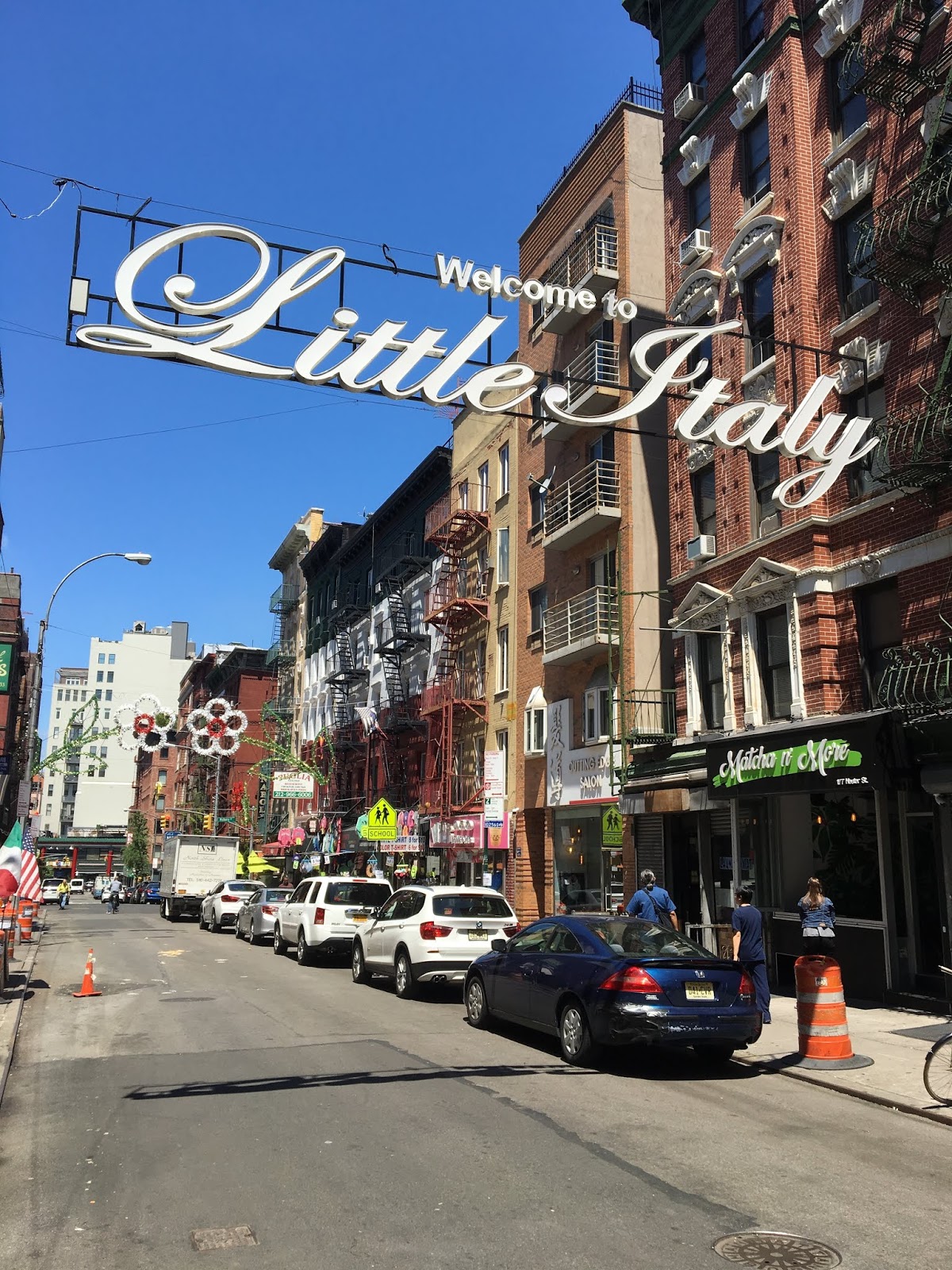
On my last trip to the city, my family decided to book a food tour. Curated by locals, The Ahoy walking tours enable you to delve into the history of a neighbourhood whilst indulging in its specialities. At this point, we knew Upper Manhattan like the back of our hands. But there were two areas that we were yet to explore: Little Italy and Chinatown.

Strolling through Little Italy is like taking a step back in time. Festooned with foliage and pastel hues, the narrow streets are a world away from 5th Avenue. Gone is the glitz, the glamour and myriad Starbucks. In their places are rows of traditional shops and eateries, once home to the Italian families who settled here back in the late 1800s.

Our first stop is a quaint little bakery called Fererra, outside of which the group has already begun to gather. As we approach, we are greeted by our jovial guide Liz who instantly puts us at ease.

First opening its doors in 1892, we learn that Ferrera is one of New York's oldest bakeries. Inside, our eyes are magnetized to the tiers of cakes and pastries, deeply redolent of Alice's tea party. A far cry from the peanut butter and caramel filled creations at Magnolia Bakery, Ferrara's offerings exude authenticity and class. With a flourish, Liz presents us each with one signature cannoli. It is small, cigar shaped and perfect in every way: lightly whipped ricotta, sweetened by a touch of vanilla and cocooned in a crisp pastry shell. I eat mine in three bites and wish I could have a second.


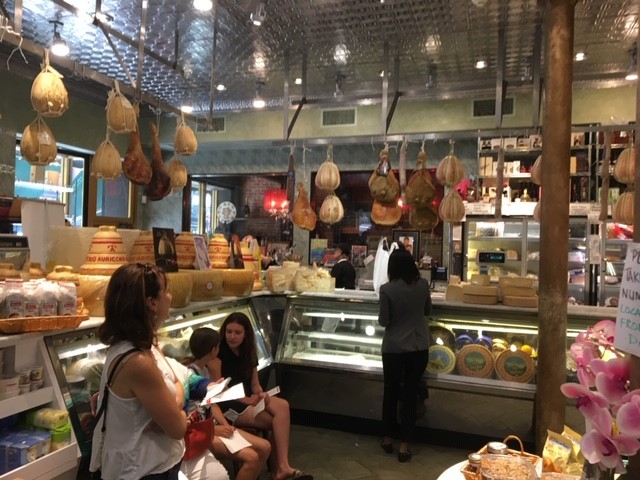
After a short walk, we find ourselves in front of an inviting deli. The windows are adorned with ribbons of brightly-coloured pasta whilst hams hang suspended from the ceiling like valances. At once, we are dazed by a pungent aroma of cheese. Liz distributes plates, loaded with briny olives and mozzarella so smooth you could eat it with a spoon. To finish, we are given ramekin of gnocchi. Coated in a tangy marinara sauce, each ball of gnocchi is fluffy like cotton wool and melts in the mouth.


We leave Little Italy behind and head south to Chinatown. Except for two collosal dragons, the streets and veneers are somewhat understated. However, we quickly learn that its heritage is anything but. Once the most dangerous area in New York, Chinatown's cobbles are riddled with secrets and gruesome stories.


We turn onto Droyers Street and end up on the doorstep of Nom Wah Tea Parlor. Inside, the walls are painted saffron and the tables are draped with gingham cloths. I take a seat at the long communal table and as if by magic, a cup of steaming green tea appears in front of me. While we wait for the food, we chat amongst ourselves like old friends as opposed to strangers.


After about ten minutes, a young waitress arrives, administering bowls and baskets, stacked high with dim sum. Like a kid in a candy store, I reach for an egg roll. In my haste, I burn my tongue, but it tastes so good that I hardly notice. Contrary to your local takeaway, these appetizers are not dripping in grease. The casket of batter is super crunchy and the filling of diced veg packs a zingy punch. Sauce running down my fingers, I bite into a pork bao bun which is pillowy soft and bursting to the seams with glazed meat. But it is the shrimp, snow pea leaf dumplings that are the highlight of the feast. Not stodgy in the slightest, these doughy pockets of shrimp are light as a feather, whilst the grassy notes of snow peas give it a fresh edge. Looking at her watch, Liz regretfully informs us that the tour is coming to a close. And so, our stomachs full, we head outdoors into the sunshine.

Showcasing a marriage of two stunning cuisines, this was the perfect way to share food with family and friends. I would definitely recommend this tour and if you are lucky enough to get Liz as your guide, I can guarantee you are in for a treat.

How the Like Button Triggered Self Hate

Monday, 19 August 2019

in

Hello beauties

Today I wanted to share with you my thoughts on Instagram's recent announcement. Over the last few months, Instagram has undergone a number of changes, including hiding like counts on photos and view counts on videos from other followers. The ongoing trial which is being conducted in six countries around the world, comes after concerns about the link between social media pressures and mental well-being. But is it time we scrapped the heart icon altogether?

As young people, our validation is measured by exam results, the label in our jeans and above all the number of likes on Instagram. Gone are the days when we could snap a selfie just for the sake of sharing. Now, if it isn't ceremoniously Facetuned and fails to hit those all-important double figures, we are deemed ugly, shunned and unworthy of attention.

Personally I think more privacy from followers would reduce the stifling, FOMO fuelled competition. However the issue remains that Instagram is warping our self-esteem. And if users can still access their own metrics, then what is the point?

Ever since Instagram launched, the word like has lost all meaning. It used to be a sign of appreciation and sincerity but now it merely signifies an absent-minded click of a button, sparking a fluctuation between dopamine and self-doubt.

For brands and businesses, likes are an important source of market research. Therefore perhaps the like button should be made exclusively available to these professional accounts. However when it comes to personal users, I honestly don't think it's necessary. One of the reasons why Instagram embarked on this trial was to encourage users to focus more on their content rather than the metrics. In my opinion the only way we can truly achieve that is to disable the like feature on personal accounts. We should be validating one another through positive comments and words, not meaningless numbers.

Will Privacy be the Next Luxury?

in

Flaunting our lives on Instagram has become as popular in Gen Z culture as going vegan, having a Netflix subscription or owning a Chilli water bottle. But as mental health concerns exacerbate and a rising number of stars quit the app, it's got us wondering: is Instagram really our future? Or will the generations to come opt for a life of privacy over a quest for perfection?

 It's nearly a decade since Facebook's protigé came and revolutionised our lives. And for its 1 billion+ users, the prospect of a world without the Gram seems pretty unfathomable.

These days if we want to update everyone on our whereabouts, we can do so effortlessly by uploading all our favourite snaps straight to our Insta stories. A hundred years ago however, if you fancied spreading a little holiday fomo, you would be faced with the painstaking task of jotting out a pile of postcards, only for them to arrive weeks after your return.

Monday mornings were even more of a struggle than they are today. Back then you didn't have the pick-me-up of a quick scroll through Love Island memes, the relationship goals of Blake Lively and Ryan Reynalds, and the news of Too Faced's latest palette to kickstart your day. Instead, you had to roll out of bed at the crack of dawn with not so much as a motivational quote or a gym selfie of Shawn Mendes.

And of course, if you were an entrepreneur, you couldn't rack up thousands of dollars in sales from just one sponsored post by Kylie Genner. The only marketing tools at your fingertips were word of mouth and shop front displays.

 Yet in spite of its incredible life hacks, Instagram has created complexities that didn't exist a century ago. For one thing, photos were treasured in albums or picture frames and were not removed if they received few comments. There was no Facetune or Snapspeed, and the only purpose for a filter was to make coffee. Trolls were just these make belief creatures that roamed in books. And as for likes: they were a sign of appreciation, not a digital price-tag of our own self-worth.

When I think of Instagram, I see it as being a lot like Jk Rowling's Diagonally and Nocturnally. On the one hand, you have this sunshiny land filled with avo toasts, pastel macaroons, unicorn inflatables and enough sparkle to make a catwalk on Rupaul's Drag Race appear understated. But with just one tap of a button or one click of a link, you can find yourself dabbling into a much darker social media maze.

According to a survey of 1,479 young people aged 14-24 years, conducted by the Royal Society for Public Health, there was a correlation between online pressures and harmful behaviours such as body shaming and disordered eating. 38% of those surveyed also said that social media had negatively impacted on their self-esteem.

Despite being ranked as the worst platform for mental health, Instagram has implemented numerous changes to clamp down on damaging content. Earlier this year the app vowed to take down all graphic images of self-harm from the site, following the suicide of Molly Russel. Back in May however, it was reported by The Times that such images were still available which shows there is still a long way to go.

Experts have also warned about the dangers of Instagram content which glamorizes eating disorders such as Anorexia and Bulemia. Drawing on a BBC investigation, such insidious posts, images and hashtags are prevalent and easy to access on the platform. Their findings went on to reveal that children and young people were being exposed to weight loss images as well as forming online peer groups to exchange extreme diet advice. Both Facebook and Instagram have since announced that they will carry out a rigorous review and remove any content which promotes disordered eating. Similar to their response to the rise in self-harm content, it seems that greater measures and regulations are imperative in order to reverse the damage.

Meanwhile, trolling has been an ongoing problem since day one of social media but it looks as though Instagram has come up with a solution. The new 'are you sure?' feature is designed to make people stop and think before making an abusive comment that they will later regret. According to an international study from the OECD, analysing the experiences of 250000 teachers in 48 developed countries, UK schools were ranked as the worst for cyber bullying. It will be interesting to see if the feature helps to decrease these rates in the coming months and years. In addition it will be interesting to see this will deter 'celebs' like Katie Hopkins from sharing their controversial opinions and making the whole internet irate (though knowing Katie Hopkins, this is no doubt as likely as Britain leaving the Eurorean Union tomorrow).

Although trolling is rampant across all social media platforms, Instagram has been singled out for being the most competitive. Thanks to influencer culture, users have been placing more and more emphasis upon social engagement as opposed to content. A number of studies from the past few years have indicated that pressure for likes and followers is linked to anxiety and low self-esteem. Back in April, the app announced a new trial to reduce competition in which like counts and view counts were hidden from other users. The test which began in Canada, has since expanded to five other countries and looks set to become a permanent feature if the results are successful. On the whole, user feedback has been positive, with many commenting that a likeless Instagram helped to curb anxiety and improved mental well-being.

While these changes suggest we are moving in the right direction, I still can't help but wonder whether privacy will be the next trendy lifestyle choice. We all know that Instagram is the epicentre of viral trends. Endorsed by the mouthpieces that are our favourite influencers and celebs, we've become obsessed with re-creating kaleidoscopic hair and more brow trends than we care to count. However it seems there is a growing movement which could be set to shake up Insta's future: the social media detox. Channing Tatum, Cardi B, Selena Gomez and Demi Lovato are just some of the A-listers who have quit their socials or chosen to take a prolonged breather. Their reasons for leaving have ranged from evading trolls to taking time out to focus on mental health. And it's not just Hollywood who are going old-school: it's the world of business too. In April, beauty brand Lush stated that they would be abandoning their UK social media accounts, asking their fans to only contact them via email or phone. The question is, will more and more users start to cotton on to the social media detox. And if so, will we eventually come full circle, existing in a world where Insta is a burnt-out fad?

One thing's for sure, the future of Instagram is uncertain. It's highly encouraging to see that social media platforms are starting to recognise and take ownership for their impacts on young people's mental health. And of course, used in the right way, social media is such a powerful tool for raising awareness and spreading positivity change. Notwithstanding, while I know it may be unpopular opinion, I don't believe the benefits are enough to outweigh the harmful effects. We are experiencing a mental health crisis and while Instagram is by no means the sole culprit, it is undoubtedly a team player in the development of negative well-being. If we are going to solve this epidemic, if we are going to create a better future for ourselves and for the generations to follow, perhaps it's time we cut Insta from our lives.

A New Arrival Wades in on the Love Island Conversation

Sunday, 28 July 2019

in

I hope you are all well and enjoying this fabulous sunshine. First off, I just want to apologise for the fact that this post is long, long, long overdue. I've taken a few months out to focus on my exams and mobility training in preparation for my guide dog. Oh and of course, I've been doing a load of fun stuff too like going out in London, going to the gym and watching Love Island (obviously). But now I'm back and raring to give this blog the love it deserves. So get ready for some awesome content coming your way about all things beauty, lifestyle, food and more.


Today I want to spill the tea on my work experience placement with The Mirror Online because it was to say the least amazing. I had a ton of fun, met some of the nicest people and got to write about one of my specialist subjects: Love Island. The first article was an early appraisal of Tommy Fury, questioning whether his nice guy persona was merely an act. Believe it or not, my opinion on Tommy has changed drastically since week two. I've come to the conclusion that he is one of the loveliest lads in the villa and I'm absolutely rooting for him and Molly Mae. As far as I'm concerned though, Oavie has already won the whole competition. He may be a man of few words but when that 6 foot 7 God opens his mouth, it is iconic.

The second feature was centred around how Love Island has never had a disabled contestant in all its five year stint. It's a story that I been meaning to write for a long time now and I'm so thankful that I was able to raise awareness of it on The Mirror's incredible platform.
If you fancy a gander, I will leave the links below and then let's jump straight into my Love Island experience shall we?

So the biggest show of the summer is back. And while ten toned and tanned Islanders jetted off to sunny Majorca, I was stuck on a train heading to rainy Canary Wharf. My seat buddy was blasting Skepta at maximum volume from his Airpods; the overpowering scent of cologne and cigarettes was making my stomach turn; and the drizzle from outside had left my hair far from camera ready. But apart from all that, I was buzzing because in less than an hour, I would be entering The Mirror.

If I had to describe myself in one word, it would be opinionated. I have something to say and I am not afraid to say it which is why I've always been drawn to journalism. Being visually impaired, I've experienced how people can underestimate your abilities. It's like the minute you mention the word 'blind', they instantly assume that you won't be intelligent, capable or assertive. I enquired about work experience at my local paper however they declined on the grounds that they could not 'cater for my needs' despite having never met me. At the time, I thought to myself, 'it is what it is'. Yes, I had just been 'pied off' but if the local didn't want me I may as well go national. And so, when I 'got a text' (or should I say email) to inform me that I had secured a week's placement at The Mirror, it was an awesome moment.

I like to think that I am pretty thick-skinned. Nonetheless, I was a bit apprehensive that the editor would take one look at my writing and show me the door. To my relief, every single person I encountered was nothing but lovely and made me feel welcome straight away.

Most work experience placements are about as bland as Tommy Fury, typically characterised by mundane activities such as filing and making cups of tea. However from 'day dot', I was propelled into the centre of the action, giving me a full insight into life as a reporter. I felt at home on the showbiz desk because while I may be clueless when it comes to football, I sure know a thing or two about celebrity gossip. From conferences to interviews, to breaking stories and exclusives, I truly experienced it all and it was a thousand times more exciting than any Love Island feud.

When the story about Sherif's shock exit from the villa broke, you could have cut the atmosphere with a knife. The air was charged with adrenaline and the frantic clicking of keys, as people around me raced to drop the story first.

For me, one of the major highlights was seeing my by-line on the articles I wrote. It confirmed to me that newspapers are where my future lies in journalism.

So like every Love Island contestant, you're probably wondering 'where my head's at'. Well one thing's for sure: The Mirror is '100% my type of paper' and my taste for the tabloids has left me hungry for more. I've met some incredible people who have taught me things I will never forget and treated me like they would anybody else. Throughout this opportunity, I hope I've shown that I am not a quitter; I'm a grafter. While I've loved my time on showbiz, I'm not going to 'put all my eggs in one basket'. I'm open to trying new things and I'm prepared to do whatever it takes to be successful in this industry.

Home Remedies for Glowing Skin and a Glowing Soul Part 2

Sunday, 10 February 2019

in

Hello beauties

Hope you are having a wonderful weekend. As promised, here is part 2 of my illuminating skincare recipes.

Face Mask

Doing a face mask twice a week will give your skin that extra TLC.

Oatmeal Chamomile Mask

Why Is It Good?

• Not just for breakfast, oatmeal is an amazing natural remedy. It contains anti-inflammatory properties and antioxidants that soothe the skin, keeping it soft and smooth.
• Chamomile has been used for thousands of years in medicinal beauty. Known for its healing and antiseptic qualities, this beautiful herb is a powerful treatment for fading scars and calming breakouts. In addition, it helps to even out complexion and tighten the pores, giving you a radiant glow.
• Plain yoghurt is full of lactic acid which digests dead skin cells and unclogs the pores.

What You Will Need:

1 tsp fine porridge oats
1 chamomile teabag
1 tsp plain yoghurt
1 teaspoon honey

How To Make It:

• Mix all the ingredients to form a thick paste.
• Add a touch more yoghurt if required.
• Apply this mask on the face and neck, and leave it on for 15 minutes.
• Rinse with lukewarm water.


Pina Colada Face Pack

I must say I do love a Pina Colada. No matter where you are, just one sip of this deliciously sweet, redolent drink is enough to transport you to the tropical islands of Mexico. That being said, at times of stress, it's probably not the best idea to reach for the bottle. So to make up for your cocktail cravings, try this exotic face mask.

Why Is It Good?

• Pineapple contains vitamin C, bromelain and antioxidants, all necessities for the treatment and prevention of acne.
• As well as being rich in Vitamin C, coconut milk is high in copper. Since copper is requisite for collagen production, this promotes skin elasticity and firmness whilst smoothing out fine lines.

What You Will Need:

4 slices of pineapple
2 tbsp of coconut milk

How To Make It:

• Bung all the ingredients into a blender.
• Whiz it up until it forms a pulp.
• Apply this to the face and leave for ten minutes.
• Rinse with cool water.

Turmeric Face Mask

 And last but certainly not least, we have our turmeric face pack.

Why Is It Good?

• Used for thousands of years in medicine and cooking, turmeric has only become the rising star of skincare within the last decade. This ancient spice, renowned for its distinctive, golden hue, is made up of an active compound called curcumin which has been proven to have both anti-inflammatory  and anti-bacterial qualities. A tiny dose of turmeric will rejuvenate dull-looking skin and ward off future breakouts.
• Bursting with skin-softening plant oils, avocado gives this detoxifying mask a sumptuous base.

What You Will Need:

half tsp. turmeric
half an avocado
1 tbsp. plain yoghurt
1 tsp. honey

How To Make It

• Mash the avocado into a bowl.
• Add the honey, turmeric and yoghurt.
• Stir until it forms a paste.
• Smooth the mixture all over a clean face. For this, I would recommend using the back of a spoon. This is because turmeric can stain your fingertips and nobody wants yellow fingers do they? Also, wrapping a towel round your shoulders would be a good idea to ensure the mask doesn't drip on your clothes.
• Let the mask sit for 5-10 minutes. Remove with a damp cloth or muslin.

Herbal Facial Steamer

Steaming your face every once in a while is a great way to deep cleanse. In a day, your skin is exposed to endless dirt, air pollution and free radicals, which overtime can block the pores. Clogged pores are one of the main factors to breakouts, and can lead to infection. The warm steam causes your face to sweat, which opens up the pores, releasing dirt and clearing the skin of toxins.

This herbal facial steamer is a favourite to many celebs as it's so calming and it leaves the face feeling super clean.

The lavender will also help you get your beauty sleep which is another bonus.

What You Will need:

1 litre water
handful fresh parsley, coarsely chopped
1 sprig fresh rosemary
1 sprig lavender
handful fresh mint, coarsely chopped
half a lemon, sliced

How To Make It:

• Place water, herbs and lemon in a large pot, cover with a lid and bring to a boil.
• Remove from heat and steep for 5 minutes.
• Place pot on a table and remove the lid.
• Using a towel, make a tent over your head and the pot.
• Steam your face for 10 minutes, taking care not to burn yourself.
• Finish with a gentle facial scrub or face mask, and then ice your face by rubbing an ice cube all over your skin, to close the pores.


Hope you have fun trying out these spa treatments and let me know in the comments if you have your own recipes or other strategies of managing stress. And before I leave you, remember what we said about not being so hard on yourself and putting yourself first for once. You're gorgeous: end of. xx

Home Remedies for Glowing Skin and a Glowing Soul Part 1

Thursday, 31 January 2019

in

Hello beauties

Is it just me or can life get pretty stressful sometimes? I'm in my first year of A levels which means inevitably, the essays are coming thick and fast. As a driven person, I'm prepared to work hard and do whatever it takes to get where I want to be. However on top of the work flow and looming deadlines, we're inundated with a million and one things to do, people to see, problems to solve. And of course, I'm not saying these are all bad things by any means. We need our friends and family more than anything in the world (apart from food and water, naturally). But the fact remains that it is becoming increasingly difficult to maintain a healthy equilibrium between our work and social lives.


It's not just the palpable pressures that can manifest stress. Sometimes, it's the underlying emotional pressures which can do the most damage to our well-being. As I've explored before, we live in a society now that is immersed in unrealistic beauty and insidious ideals. Whether it be through social media or magazines, it is morphing body image and inciting a firestorm of anxiety about everything from how we look, to what we eat, to how much exercise we should be doing.

When all these combined pressures build up, it can feel really overwhelming. We try to divide all our time and energy between friends, family, work, gym, social media, cooking, sleeping and so much more in our hectic lives. Yet if we try to put 100% into everything we do, all we're creating is an exponential equation of stress.

It's not often that we can find time to take a step back from it all and have a bit of well-earned me-time. I cannot 'stress' the importance that we should be congratulating ourselves, rewarding ourselves and acknowledging daily how goddamned amazing we are. Without that self-love, we will never reach our full potential.

The most simple way to manage stress is to say no to more things, to put yourself first every once in a while and just give yourself that time of day. Honestly, you will feel so much better for it. When I'm stressed, my typical routine is that I do a lot of Pilates, eat a lot of dark chocolate and watch a lot of reality TV (Made In Chelsea all the way). But for me, the ultimate way to de-stress is to have a good pampering sesh.

In today's post, I'm going to be showing you how you can turn your humble abode into a fully-fledged spa.

Although I buy loads of products, I also love to use natural ingredients on my skin since they do not contain harmful chemicals or irritants. You might be thinking that DIY beauty treatments sound like a whole lot of effort but trust me they're so worth it. For one thing, making the recipes is super therapeutic and fun. Made from inexpensive, store-cupboard ingredients, each of these skincare treatments will give glowing results and help relax the mind without breaking the bank. So grab a spoon and a mixing bowl, grab some scented candles, put on a Spotify spa playlist and relax...

Cleanse

Arguably the most essential step to your skincare routine, a morning and evening cleanse will help detoxify the skin and get rid of excess oils, dirt and pollutants built up over the course of the day. This DIY honey and aloe vera cleanser is super easy to make and is suitable for all skin types.

Why Is It Good?

• Including aloe vera in your daily skincare routine will keep your skin clear and silky smooth. As well as being moisturising, aloe vera is known for its anti-inflammatory properties, which helps reduce redness, even out complexion and clear skin of blemishes.
• Honey is quite possibly the Queen B of skincare. Naturally anti-bacterial, she is a powerful treatment for a number of conditions such as acne. Packing a punch of vitamins, minerals and antioxidant, honey intensely hydrates and nourishes the skin giving you a natural glow.

What You Need:

3 oz honey
3 oz aloe vera gel
1 tbsp coconut oil (if you don't have this, you can substitute for extra virgin olive oil, sweet almond oil, Jojoba oil, or avocado oil)

How To Make It

Mix all the ingredients together in a bowl until well combined. And that's it. This cleanser can be stored in a sealed jar or air-tight container at room temperature for a couple of months. If you are using fresh aloe vera, store cleanser in the fridge to preserve the aloe.

Before applying, shake the cleanser. Using a spoon, take a small amount of cleanser (about the size of a pea) and massage into the face. Leave for a minute to absorb the goodness. Gently remove the cleanser. Rinse, and pat dry with a soft towel.

Tone

There are a number of conflicting ideas about what a toner really does. And some have even questioned whether it is necessary at all. Well, I'm here to tell you sister, that toner is your best friend. After cleansing, a cotton pad doused in this underrated little potion will help close the pores, restore the Ph of your skin and reduce cleanser residue.

Green Tea, Lemongrass Toner

Used by the likes of the Victoria Secret angels, this easy, natural toner is a must-try.

Why Is It Good?

• Green tea is not just a Beveridge; it's a magical drink for the skin? Abundant in antioxidant, it helps to heal and protect damaged skin from environmental stresses, in turn slowing down the process of premature ageing. As well as having anti-microbial qualities, it also contains tannins which act as an astringent, removing excess oils, tightening pores and mattifying the skin.
• Lemongrass is also a key ingredient to brighten up your day and your skin. Frequently used in aromatherapy, lemongrass is renowned for its invigorating scent, helping to calm the mind and balance mood. In addition, its antiseptic properties help to clear skin of breakouts and prevent future ones from appearing.

What You Will Need:

1 cup water
2 green teabags
2 stalks lemongrass, finely chopped
Cotton pads

How To Make It:

• In a medium saucepan, place the water and lemongrass, and bring to the boil.
• Once boiling, take off the heat and drop in the green tea bags. Let steep for 3-5 minutes.
• Remove tea bag and allow to cool slightly.
• Place cotton pads into the pan and leave them to soak up the liquid for an hour or so. When they're ready, take the cotton pads out, put them in a zip-lock bag and place in the freezer overnight. In the morning, get a pad out and rub it all over your face after cleansing. This feels really cooling and soothing on the skin, a perfect way to start the day.

• An alternative way of doing this method is: after making the tea, pour the water into an ice cube tray. Freeze for at least two hours or overnight. Once frozen, pop out a cube and rub the ice cube in circular motions around your face. I like to hold it on each eye for about ten seconds each, too. When ice cube is almost melted or you just can't take the cold longer, pat your face dry with a clean cloth.


Apple Cider Vinegar Toner

Yep, I know it sounds kinda weird but stay with me on this one.

Why Is It Good?

• The acids present in ACV exfoliate dead skin and reveals a fresh, healthy layer of skin cells.
• ACV is also an astringent and will prevent your pores from getting infected and inflamed.

How To Make It:

• Mix 1 part apple cider vinegar with one part water.
• Soak a cotton ball in the liquid and swipe over the face.
• Leave overnight and wash off in the morning.

Caution: If you have sensitive skin, it's probably best to go with the green tea. But if you have normal to combination skin, this ACV alternative is really effective.

Moisturise

The honey and aloe cleanser is nourishing on its own so it's not essential that you moisturise as well. However, if you feel you need an extra boost of hydration, then a dab of coconut oil will do the trick.

Why Is It Good?

 • Coconut oil has antimicrobial properties which will keep the skin clean and infection-free.
• It also protects your skin from UV rays.


Exfoliate

It's important to exfoliate 2-3 times a week, in order to get rid of dead skin which can clog the pores. A weekly scrub is also going to brighten your complexion no end.


Almond Scrub

Why Is It Good?

• Massaging ground almonds and wheat germ into the skin stimulates release of vitamin E. This is essential for skin health.
• Lemon is rich in vitamin C which acts as a skin brightening agent.

What You Will Need:

30g ground almonds
20g wheat germ or oat bran
8 tbsp honey
zest of 1 unwaxed lemon

How To Make It:

• Mix together the ingredients till well combined.
• Store in a jar or air-tight container.

Stay tuned for part 2 where I share my gorgeous home-made glow masks and more. xx