Review of Cinderella at The Vaults: Sparkling with swagger, sass and unapologetic mayhem

Wednesday, 1 January 2020

in

Last year, actress Keira Knightley kicked up a storm, when she revealed that her little girl was banned from watching Disney princess films on account of their 'anti-feminist' undercurrent. Despite her reservations, I reckon even Knightley would be charmed by the latest, Cinderella adaptation to hit the stage at The Vaults Theatre. That being said, thanks to the copious swearing and crudity, this spectacle is not exactly what you would call PG.

Located below Waterloo station, The Vaults has earned a reputation as the speakeasy of theatre land, with its alternative and immersive entertainment. The first time I came across this graffitied venue was back in primary school, when my parents took my sister and I to see The Railway Children. I remember being utterly transfixed by the experience and I have been intending to return ever since. This panto season, I finally got round to doing so, by booking myself a ticket to their production of Cinderella.

When a show is produced by a company called Not Too Tame, you know it's going to be anything but conventional. Reflecting their 'break the mould' artistry, writer Luke Barnes toughens up the age-old classic in this adaptation, which is sparkling with swagger, sass and unapologetic mayhem.

Our story takes place in a traditional, English pub, redolent of Walford's Queen Vic and Weatherfield's Rovers Return. After her proprietor father dies, Cinders is left to run the boozer with her malevolent stepmother, unlovely step sisters and numerous other quirky characters.

Forming a 360 degree view of the pandemonium in all its pint-spilling glory, the in-the-round arrangement truly demolishes the 'fourth wall' between the actors and audience. Plus, the on-set bar means there is no need to buy your tipple beforehand. Simply wander onto the stage and wait to be served at any moment during the performance. If a glass of bubbles is not enough to loosen your inhibitions, then the karaoke should do the trick. From Bohemian Rhapsody to Dizzy Rascal, you'll be up on your feet, dancing in the aisles and singing your little heart out.

As well as the plotline, the cast list receives a serious refurbishment. Cinders is no longer the docile damsel in distress, but rather a feisty young woman who is not afraid to voice an opinion. The fairy godmother is a sequin clad, queer bloke named Mike. Prince Charming lacks both royal blood and charisma, instead resembling a narcissistic lothario from The Only Way Is Essex. Even Buttons the mouse gets recast as a dog depressed to the point of suicide, who spends the duration gnawing on a plastic leg (don't ask). For me, the stars of the show would have to be the twins, who had the audience in stitches with their crass remarks and Kat-Slaterish get-ups.

Rather than a black tie affair, Cinderella is hankering after an invite to her step sisters' party. The question is, will she make it and flirt with the guy she has her eye on? Or, could her happy ending lie elsewhere?

Admittedly, some of the punch lines may be a little un-2020 and in danger of causing the Woke-ometer to explode. However, if you are a sucker for dark humour, then you are sure to be cackling until the tears stream down your cheeks. Barnes' balance between poignancy and slapstick is well accomplished in this tale, where Eastenders meets Love Island, meets Rupaul's Drag Race. Furthermore, the karaoke element transforms this adaptation from a bog standard panto to a fully-fledged, party experience. All in all, a fun-filled evening, topped off with cocktails at The Oxo Tower and amazingly not even a hangover in the morning (I guess midnight magic is not just in fairy tales).

Cinderella plays at The Vaults until 12th January, with more shows to follow throughout the new year.

Why it's time to cancel celebrity 'experts'

Thursday, 26 December 2019

in

People in the public eye don't half come out with some rubbish. The obvious culprits would have to be our own 'much-loved' politicians. But aside from the bickering schoolchildren down at Westminster (the less said about them the better), contestants on reality shows aren't renowned for their grasp of well, reality. Take BBC's The Apprentice for instance. This series in particular saw a number of the entrepreneurs, battling to score Lord Sugar's investment and fuelling the slapstick with their hyperbole. First up, there was winner Carina, humorously dubbed the 'baker who couldn't bake'. Then, there was marketing man Lewis whose vision of a travel venture in Croatia was somewhat dampened by his inability to pinpoint the country on a globe. That being said, nobody could deny that the prize for the most controversial contestant went to Miss Lottie Lion, otherwise known as 'the new Katie Hopkins'. During her stint on the show, the 19-year-old librarian riled viewers with her numerous, eyebrow raising statements, including assertions that she was a 'wine connoisseur' and that she had 'fifteen years in the music industry' secured under her belt. In the interviews, Lottie finally proved that empty carts rattle the loudest, when it was revealed that her business plan did not bear a single figure. Hmm, bit of a schoolgirl error there Lottie, if you don't mind me saying.

Moving on from reality stars, there isn't a day that goes by when we aren't preached at by A-Listers turned climate change activists. Now, I don't dispute that their endeavours to save the planet are laudable, if at times a tad hypocritical (didn't Benedict Cumberbatch star in an advert for gas guzzling cars?). I am, truth be told, a committed environmentalist. Nonetheless, I firmly put down my foot at their suggestion of a Christmas, filled with PC pantos, tasteless tofu and not a present in sight! The world is woke enough without jetset celebs, trampling over the festivities like the eco-friendly Grinch.

 Of course, we can sit and scoff at the braggadocio of reality TV contestants or the double standards of Hollywood's sustainable warriors. But the point is, influential people are making claims about topics which they have limited knowledge or experience of. And while the examples outlined above are quite clearly harmless to us as fans, there are celebs out there who could be directly putting followers' mental and physical health at risk with their dodgy endorsements.

Thanks to social media, we are living through the phenomenon of the 'self-proclaimed expert', a time when anyone and everyone can share their wisdom with the world. Some might say a more enlightened society can only be a good thing; after all, as stated by Margaret Atwood, 'knowledge is power'. However, when the bearers of knowledge have little or no credentials and not an ounce of evidence to prop them up, it raises the question: are we being empowered or merely blinded to our own reality?

I don't mean to be cynical about social media influencers. But, the clue is in the title; their job is to influence us. And although some may use that platform to promote positivity, for many it is driven by the allure of a lucrative income.

Sponsorships have proven a valuable tool to bring in the big bucks for both global and independent brands. The principle makes sense: gather a bunch of popular people, get them to photograph or review your products, and then give them a reward in return. During which brands sit back and wait for the cash to flow in, we as consumers gain a coveted glimpse into our favourite celebs' wardrobes, make-up bags and kitchen cupboards. So it's a win win situation, right? Well, not quite. If influencers are being tied into thousand pound contracts, showered with bougie gifts or whisked away to sun-drenched locations, then chances are their reviews will be biased and to some extent scripted by the brand. Consequently, we are being influenced and coerced into buying things we wouldn't usually buy, just because the celebs we idealise claim to love them so much.

In a bid to clamp down on misleading sponsored posts, the Advertising Standards Association (ASA) partnered with The Competition and Markets Authority (CMA) to launch a guide for influencers. Published over a year ago, the online resource provides guidelines about what constitutes an advert and about how influencers should elucidate this to their followers. Failure to disclose such commercial partnerships can result in at best a metaphorical slap on the wrist, and at worst a hefty fine or up to two year's imprisonment. Since these rules came into effect, the ASA have issued multiple warnings to brand ambassadors such as love Island's Olivia Buckland and Made In Chelsea's Louise Thompson. Even if influencers may feel pressured to be more transparent about their sponsorships, I still don't believe it is enough to deter them from making dubious affirmations.

Just look at the myriads of high profile beauty gurus. Back in January, Kendal Jenner came under fire after telling fans on Instagram that her 'clear' skin was thanks to Proactiv's line of skincare products. Conversely, in a resurfaced New York Times interview from 2015, Kylie revealed that her supermodel sister's acne was 'cured' by a Beverly Hills' dermatologist (no doubt on a footballer's salary). I have a real problem with celebrities being disingenuous about what cosmetics they use, or avouching that products will 'cure' and 'solve' our every skincare woe. Acne is something that a lot of teenagers suffer with and feel insecure about. Therefore, it seems incredibly irresponsible that brands can play on these insecurities and dupe vulnerable consumers by dazzling them with celebrity endorsements. On television adverts and shop shelves, a serum, plastered in miracle claims, would never get authorised. So why are companies recruiting social media influencers as mouthpieces, when they have never even used the product, let alone know what it does.

Mirroring the cosmetics industry, the online 'health' scene is awash with pseudoscientific osmosis. On one end of the spectrum, there are the 'wellness' gurus like Madeline Shaw who seem pretty harmless with their virtuous posts about skin-glowing powders, gut health supplements and the power of plant-based, (as if butter wouldn't melt- or should I say coconut oil). Dig a little deeper however, and you will find in most cases that there is no concrete to their claims: just pure, hot air. Drawing on a study by a team at the University of Glasgow, 90% of these influencers are dishing out false nutritional advice. And they're not the only myths to consider. Working in tandem with the wellness squad, you have the militant dieters who will stop at nothing to peddle you a cacophony of quick fixes and extreme weight loss plans, all of which are 'guaranteed' to transform your body and transform your life. Whether it be diet teas, juice cleanses or medieval looking waist trainers, you've no doubt stumbled across celebrities, raving about these fads on their social media feeds. The thing is though, the vast majority of quick fixes have no effect whatsoever on your weight and could instead be detrimental to your health. Plus, while an influencer might credit a particular diet pill or potion, there is no way of verifying whether this is the true reason for their purported weight loss. Only last week, Lauren Goodger was plunged into hot water after footage emerged of her agreeing to endorse a poisonous diet drink. As part of an undercover documentary for BBC3, Goodger and several other stars were secretly filmed being asked to promote a fake weight loss beverage called Cyanora. They were informed that the fluid contained hydrogen cyanide- a deadly chemical used by the Nazis in concentration camps and on death row. Not even batting an eye lid at the ingredient list, the Towie star also let slip that she had never tried Skinny Coffee, a product which she had previously accredited for her two stone weight loss in multiple sponsored posts. The objective of the BBC sting was to find out whether influencers genuinely consume the products they promote and, judging by the results, it would seem often this is not the case. Goodger has since taken to Instagram, explaining that her alarming alacrity was simply because she had never heard of cyanide. Despite this feeble excuse, it still doesn't justify the fact that she could have put fans in danger if she had made such a recommendation.


It's also important to point out that not all the self-professed gurus are doing their rounds on the internet. Some are even trying to inject their 'expertise' into legislation. A few months ago, it was announced that Great British Bake Off judge Prue Leith had swapped the tent for parliament, becoming the latest 'star advisor' to a government review of hospital food standards. Although she may be the two Michelin starred chef with unrivalled, knowledge of pastry and soufflés, I don't believe the same can be said for her medical credentials. After news of Leith's appointment broke, many were left baffled by the government's naive selection. For one thing, feeding sick patients is a little more complex than cooking a slap-up meal. Their nutritional requirements are going to be vastly different to the general population, due to illness or the treatment they are undergoing. Therefore, surely it would make sense if we enlisted, I don't know, actual experts and actual dieticians with actual experience of working in hospitals. I mean, that would be the logical thing to do; but then, if their previous decisions are anything to go by, what do our government know about logic?

The Bake Off queen hit the headlines again recently, this time with her nanny-state solutions for the 'child obesity crisis'. During a heated debate on GMB, she suggested that all schools should 'ban packed lunches' on account of the fact that 'mums filled them with junk'. And, based on social media reactions, I don't think I was the only one, shouting at the TV. Firstly Prue, we shouldn't be demonising food and labelling it as junk because that, my friend, is sending a pretty pernicious message to young kids. We should be encouraging children to eat everything and I would have thought a foodie like yourself would be on the same wavelength. Secondly, it's not fair to make parents feel inadequate. They know better than anyone what's best for their children, and I think most would agree that there is enough parent shaming on the playground without celebrities jumping on the bandwagon. My outrage was only heightened by her next piece of ridiculous advice that we should be restricting ourselves to ONE treat such as a measly biscuit, per week! What planet do you live on Prue? You're telling us that we should only have a solitary cake a week, and yet you taste test and judge these baked goods for a living? If that's not an oxymoron, I don't know what is.

All in all, there is a stench of hypocrisy surrounding many celebrities' actions. It's times like this when the press is more important than ever, for busting myths and bringing the truth to the light. When I am a journalist, I hope to do the same, as I know the damage these claims can cause especially on one's mental health.

To finish, I would like to share my advice for all the self-titled gurus or the celebrity experts who may be reading this. You are not an expert. Just because somebody uses beauty products, it doesn't make them a dermatologist. Just because somebody has read a book about nutrition, it doesn't make them a nutritionist or a dietician. Take responsibility for what you promote. Don't make claims when you don't know the first thing about what you're preaching. And if in doubt, in the words of Simon Cowell, stick to your day job.

To Vote, or not to Vote? That is the Question.

Thursday, 12 December 2019

in

People always build your first voting experience up to be significant. It's supposed to mark a transition into adulthood, an inaugural moment to make your voice heard. However, as I dashed into the polling station, soaked through by the rain, I did not feel a sense of empowerment. Instead, I was shivering and wondering how long it would be until I could go home, have a hot bath and then watch Jack Whitehall's latest show on Netflix. After giving my name and address to the nice man, I was handed my ballot paper. I scrawled a cross next to my chosen party, slipped the paper into the box and hurried back outdoors to brave the elements. That was it. By any standards, not an experience to write home about and one which I will cease blogging about.

Truth be told, politics is not my forte. Personally, I would rather while away an evening, watching Made In Chelsea than yawn my way through an episode of Question Time. While I will never be a dedicated LBC listener (much to my father's disappointment), I do believe politics is important. I've always strived to keep track of what's going on, even if that means wading through the esoteric manifestos. However, this general election has been shambolic. And I can safely say, I am not the only one who feels this apathy.

Our trust in politicians has been wearing thin for the past few years. Back in the summer, for example, the public including myself, were more fixated by Love Island, as opposed to who was going to run our country. This particular general election has not only broken records for being the most boring and joyless period in political history; it has marked a climax of this unpopularity contest. As voters, we are not choosing who is the best out of the best. It is instead a question of holding our noses and working out who is the least worst or the least capable candidate of dragging our country further into the mire.

I feel we are entitled to throw shade at our politicians. They have, quite frankly, made the UK into a global laughing stock, with their bickering and dithering and empty promises. If we didn't already know our MPs were childish, we certainly do now, thanks to Bojo's antics on Wednesday. I mean, evading a journalist by playing hide and seek in a fridge? It might be imaginative but are we really still in year five?

Aside from the embarrassing blunders and a united loss of the will to live, this whole election has been shrouded in a much darker overtone of fear and uncertainty. Many of these MPs may be highly educated. But they don't know the first thing about empathy, about respect and about what this country truly needs.

And of course, at the heart of all the scandal and delusion, there is the Brexit board game on our hands. To think over four years ago, the word Brexit didn't even exist. Now, the B word is positively ubiquitous, dominating everything from our headlines to our social media feeds. As if we weren't fed up enough already, increasing numbers of companies are now cashing in and jumping aboard the band waggon, emblazoning their merchandise with political slogans. The other day I saw a Brexit Christmas jumper and I literally wanted to cry. Firstly, who would waste their money on that? And secondly, how have we reached a point where we are tainting the festive cheer with such misery? We have to ask ourselves: what lies in store? Will TV franchises start commissioning Brexit themed spin-off shows to add to the mix? I mean, the options are endless. We could have Deal Or No Deal. Alternatively, what about a Take Me Out Brexit special? It would be far more entertaining than the usual mind-numbing debates. We could scrap the bombastic speakers and instead have Paddy McGuinness, keeping order over the MPs. Just imagine it: Boris Johnson dancing down the lift before delivering his deal. Then, when voting, they could adopt the 'no likey, no lighty approach', and if in an instance of a majority, Paddy could announce 'congratulations you've got yourself a deal, you're going to the Isle of The Singles Market!'. Better still, ITV could do a spin-off jungle called I'm A Brexiteer Get Me Out of Here, in which we send the MPs to the Australian outback and force them to eat cockroaches until they come up with a solution. Jezza and Bojo would probably tear each other to shreds or push each other off that bridge at the end. But let's be honest, it would be quality TV at its finest.

Whether those of us desire or disdain of Brexit, I think the principle remains: we are sick and tired of it. Our politicians are not listening. They are messing around and tampering with our future as if it is all a game.

But alas, time is ticking and, as we speak, our votes are being counted. Within a matter of hours, we will be finding out who has been given the set of keys to 10 Downing Street. Whatever happens, it's going to be tight. Let's just hope things don't take a turn for the worse.

Oxford Know-it-alls Score Zero for Inclusion

Tuesday, 12 November 2019

in

We all know the nanny-state zealots are making a mockery out of democracy. Nonetheless, Oxford University's move to jump aboard the snowflake express could mark an all-time low. Mirroring the House of Commons, Bercow-inspired boffins have voted to scrap clapping for silent jazz hands. In an age of wokeness and call-out culture, the policy has been passed due to the 'triggering' impacts of loud noises on students with anxiety and autism. However, far from evoking a 'hear, hear', this cringeworthy show of 'inclusion' has sparked slow, sardonic applause among the general public.

Most are fed up of snowflakes reconstructing norms to meet the sensibilities of a tiny minority. Despite Oxford's claims, this jazz hands claptrap is not 'inclusive', 'accessible' nor 'lovely'. It is downright derogatory. Being blind, I wouldn't have a clue whether the audience were waving at me. Moreover, being treated differently goes against everything I stand for. To me, my visual impairment is irrelevant. It does not change the fact that I am a strong, independent and career driven young woman. I've experienced what it feels like to be underestimated, patronised and blanked by others. But rather than conceding to the self-fulfilling prophecy, these preconceptions have only galvanized me to be the most successful person I can possibly be.

So what do these sanctimonious do-gooders go and do? They seek to highjack the disability movement, by mollycoddling and portraying disabled people as fragile and uber-sensitive. Frankly, if we're not careful, the snowflake express could not only derail progress; it could reinforce outdated images and breed more prejudice.

This cotton-wool generation of students needs to get a grip for life in the real world. And if we want to be inclusive, we shouldn't have to denounce a universal form of appreciation.

A letter to Dame Sally Davies: 'Snack Fascism' is dangerous and will not solve child obesity!

Sunday, 13 October 2019

in

Dear Dame Sally Davies,

My name is Charlotte Bateman and I am 18 years old. I am writing this letter in light of your recent proposal to tackle child obesity: a ban of food and drink (with the exception of pure water) on public transport.

It would seem that your final report as chief medical officer has created quite the stir, earning yourself a Marmite legacy among the press, which ranges from 'top doctor' to 'the most deranged of the nanny-state zealots'. And of course, there isn't just the media backlash to contend with; there are the millions of enraged commuters who perceive your suggestion to be as desirable as the prospect of a no deal Brexit. Alas, I am not here to get political nor to shower you with insults. I am merely here to establish the facts.

When I heard about your proposal, my first reaction was to break out into a slow, sardonic applause and think to myself 'oh good, we've reached a real life dystopia'. I mean come on Sally, you have to admit that it sounds like you've been identifying a bit too literally with George Orwell's 1984, rather than basing your ideas on solid evidence, proven by that thing we call science. I don't know if you are aware of this but food is actually a human right, protected under article 25 of the Universal Declaration of Human Rights. Therefore, if we start dictating when people can and can't eat, I think that in itself raises a few red flags, don't you?

It is also worth considering that most commuters do not have time to eat breakfast at home, meaning the train journey to work is their only opportunity. Correct me if I am wrong, but are you insinuating that these commuters should just skip the most important meal of the day? Hmm, that's healthy advice coming from a chief medical officer.

How you intend on policing this snack attack is utterly beyond me. If I whip out a sandwich on the Piccadilly line, will somebody notify TFL police to perform a citizen's arrest for food felony (after all, the station announcement always urges us to 'see it, say it, sort it'. If I start sipping from my water bottle, will I be accosted by sniffer dogs to check the fluid is not 'riddled' with additives or artificial flavours? Alternatively, will it be the bus driver's job to deprive commuters of their morning flat whites because I can just picture how that would go down: some poor, cowering driver being pelted with pain au chocolats and egg McMuffins by a brigade of hangry, caffeine craving passengers. Forgive me for my satire but I think it's time Miss Davies that you woke up and smelled the coffee. The whole thing is a joke. And I don't care if such measures have been effective in Japan or on Mars; the fact that you are even entertaining this half-baked baloney suggests to me that your departure is well overdue.

After reading the article, I then listened to your interview on Radio 4 and naturally, my open-mouthed amazement turned to clenched teeth rage. As you waffled on and on about the 'flood of unhealthy food' in our midst, I found myself yelling at the radio, shaking with an incredulity greater than that which I felt at the news of Pizza Express potentially going into administration. Why do I feel so vehemently about this, I hear you ask? Because I am fed up of being preached at and I am fed up of being made to feel guiltY.

Ever since my early teens, I became immersed in the online health scene, which ultimately fuelled my body insecurities. At the time, the mantras and doctrines seemed so motivational. But in hindsight, I can see that these gurus were not inspiring me to be healthy. They were coercing me to obsess over my food choices and worry that I was ugly. Luckily, I have the most incredible family who have always promoted a joyous approach to eating and who have helped me to overcome my struggles with mental health. But this isn't about me. This is about the kids of 2019, the kids who are being brought up into an echo chamber of toxic health myths and moral panics about obesity.

Before you jump to conclusions, I am not suggesting that we ignore child obesity. For our children, we must do all we can to protect their health and ensure the best quality of life for them. Where my concern lies is the insensitive and frankly ignominious manner in which our government have approached this situation. As a result of the esoteric reports and conflicting medical data, we have formed a tunnel vision of statistics and percentages. But we have to remind ourselves that these are children we are talking about: young, vulnerable kids who, thanks to the web, have unlimited access to this health obsessed society.

Since Instagram, we have witnessed a sea change in 'wellness' and weight loss culture which has capsized the equilibrium of 'healthy-eating'. Twenty years ago, a balanced diet meant eating a wide variety of foods across all five food groups. But thanks to the never-ending surge of capricious health trends, we've become obsessed with where food is coming from, which foods are good for us and which foods are, so we're told, 'bad' for us. As a consequence of this over intellectualization, the social media diet has been deconstructed by online health gurus and stripped down to the bare minimum. On one end of the spectrum, there are the 'wellness' angels who seem pretty harmless with their virtuous posts about 'clean-eating' and the power of plant-based, (as if butter wouldn't melt- or should I say coconut oil). But then on the opposite end, you have the militant dieters who will stop at nothing to peddle you a cacophony of quick fixes and extreme weight loss plans, all of which are 'guaranteed' to transform your body and transform your life. These Instagram tribes are different but just as dangerous in their ethos. For starters, a study by a team at the University of Glasgow found that 90% of these influencers are dishing out false nutritional claims. Meanwhile, a BBC investigation warned about the prevalence of Instagram content which glamorised eating disorders. The study showed that children and young people were not only being exposed to weight loss images but were also forming their own online peer groups to exchange extreme diet advice.

There is no mistaking it: food anxiety is rising amongst our kids. So surely we would take this into account and navigate the whole child obesity conversation with a bit more caution, right Sally? But no. Instead, the government has gone in all guns blazing, invading the headlines and the education system with their countless health initiatives. And if that wasn't damaging enough to kids, the messages which many of these campaigns perpetuate, are startlingly similar to the narratives of the Instagram health community. Except this time it isn't the unqualified Kylie Jenners and Madeline Shaws who are coercing sons and daughters to worry about their weight. It is primary school head teachers with their lists of restrictions and lunch box policies. It is public health officials who believe it is a good idea to weigh children in school from the age of 4 years old! It is international diet companies who are now marketing to the child consumer demographic. Just look at Weight Watchers' spanking new diet app for kids, complete with its very own before and after shots no less! I mean, how the hell did that even get authorised? The world has gone bonkers and that is why we do not need some other farcical initiative such as a snack ban on public transport to add to the equation.

You say that we ‘should not normalise mindless snack culture'. But is it not worse to normalise food fascism and food shame? What you are overlooking Miss Davies is that children are incredibly perceptive. They will pick up on these customs and attitudes but not necessarily in the way you intend. Drawing on a 2012 study conducted by Levinson and Rodebaugh, there was a clear correlation between negative social evaluations and disordered eating behaviours. Therefore if you are proposing that we deploy judgement and guilt as incentives to stop kids snacking, I can guarantee it will not have the desired effect. All your ban will achieve is increasing children's anxiety about eating in public. And anyhow, what's to stop them from snacking when they are alone at home? Additionally, can we please get rid of this 'mindless' malarkey which you keep referring to? For many people who struggle with their weight, it is nothing to do with the level of will power; rather, it stems from our emotional and mental well-being. Plenty of studies have shown that stress and depression can cause individuals to binge or over eat when they are alone. So one could argue that the stress of being scrutinised in public could exacerbate our emotional eating habits.

You also say that this proposal will create a 'safe' place for children on public transport. I have thought long and hard about this and I am still none the wiser about what you mean. Unless somebody proceeds to use their tuna baguette as a weapon, how exactly would eating on a train be considered 'unsafe' to young passengers? You can parrot the smoking ban example all you like, but food and cigarettes are not the same. Our government illegalised smoking on public transport because of the dangers it poses to other passengers' health. With smoking, we run the risk of inhaling toxic second-hand fumes which can cause permanent lung damage. Whereas, if somebody is eating Pickled Onion Monster Munch on the train, you may have to endure the stomach churning stench, but apart from that, it isn't rendering any untoward symptoms. The fact that a medical professional can even make this comparison is just absurd.

I get you are trying your best, I really do. But this war on so-called junk food will not solve anything. Do me a favour Sally and think back to what children were eating in your day. The reason I ask this is because I suspect children consumed much more sugar during the 60s and 70s than they do today. Back then there were tuck shops at schools to get sweets at break and there certainly weren't any Jamie Oliver types to banish Turkey Twizzlers from the canteen menu. At home, the fruit bowl wasn't exactly brimming with choice due to importation costs; a handful of apples, a bunch of bananas and an orange or two were about your lot. Yet despite the lack of variety, child obesity wasn't an issue. In fact it has only caught our attention within the last thirty years, which means food cannot be the primary cause. Ask yourself what is the most notable change which has occurred between the 20th and 21st centuries? The obvious answer would have to be technology. Just do the maths: increased screen time = decreased activity.

The thing is Sally, you must be an intelligent woman, otherwise how on earth would you have obtained the double title of professor and dame? Even so, I don't need a degree in medicine to tell me that your proposal does not have a leg to stand on. I don't need to be a professor or a goddamned dame to understand that this ban would not make an ounce of difference and would only fuel children's anxiety about food. I may not have these badges of honour and in your eyes, I may only be an opinionated 18 year old who doesn't know what she's talking about. But I have experiences of mental health which in this instance speaks much greater volumes.

Current government strategies are clearly not working, so what can we do to fix this? Well as it happens, there are a number of simple measures we can take which I will briefly summarise. From an economical perspective, let's renege the sugar taxes and cease throwing money at 'healthy eating' advertising. Instead let's make foods such as fruit less expensive, allowing families of all incomes to afford more variety in their kids' diets.

It is also essential that we eradicate this shame around eating, and instead endorse a celebration of produce. At primary school, we need to get kids into the kitchen and teach them how to cook. Not only will this expose them to different ingredients and produce, the fun and hands-on approach will nurture a much healthier relationship with food. Secondly, rather than placing foods into 'good' and 'bad' categories, we must encourage kids to eat everything, simply in moderation. As long as they're consuming enough fruit and veg, why the hell shouldn't they be allowed a treat such as a biscuit or a packet of crisps? Thirdly, we need to find time to sit down and eat meals as a family or with friends. According to the psychologist Geoft Hofstande, the behaviours of a group we identify with such as our family, can influence the construction of our own identities. Therefore if we make meal times sociable and engaging, children are more likely to adopt positive associations with food. This approach also applies to exercise. For example sports' clubs allow kids to have fun with their friends and stay active at the same time.

Mental health is just as important as physical health. Thus, I believe measures such as these could help to reduce child obesity without inciting food anxiety.

I hope that you take on board my suggestions.

Yours sincerely,

Charlotte Bateman
A bite of the Big Apple: My review of Ahoy New York Food Tours

Wednesday, 18 September 2019

in

Hello beauties

As I may have mentioned before, New York City may be one of my favourite places in the entire world. I love it for the people, the shopping and above all the food. Today I want to share with you my review of Ahoy Food Tours because I had an amazing experience with them and it was hands down the best tour I've ever been on. So without further ado, let's get straight into it.


Visiting New York is like embarking on a culinary pilgrimage. round every corner lies a delight: the sugary perfume of pretzels in Midtown Manhattan; the sizzling of woks in Smorgasburg market; the charred hamburgers, gilded with melting cheese and studded with caramelised onions.

New York doesn't do lacklustre. It serves up an amalgam of flavours that range from refined to contemporary to boarder line crazy. But in every single dish, there is one resounding ingredient. And that is love. Here in the Big Apple, food is created to be enjoyed and shared.

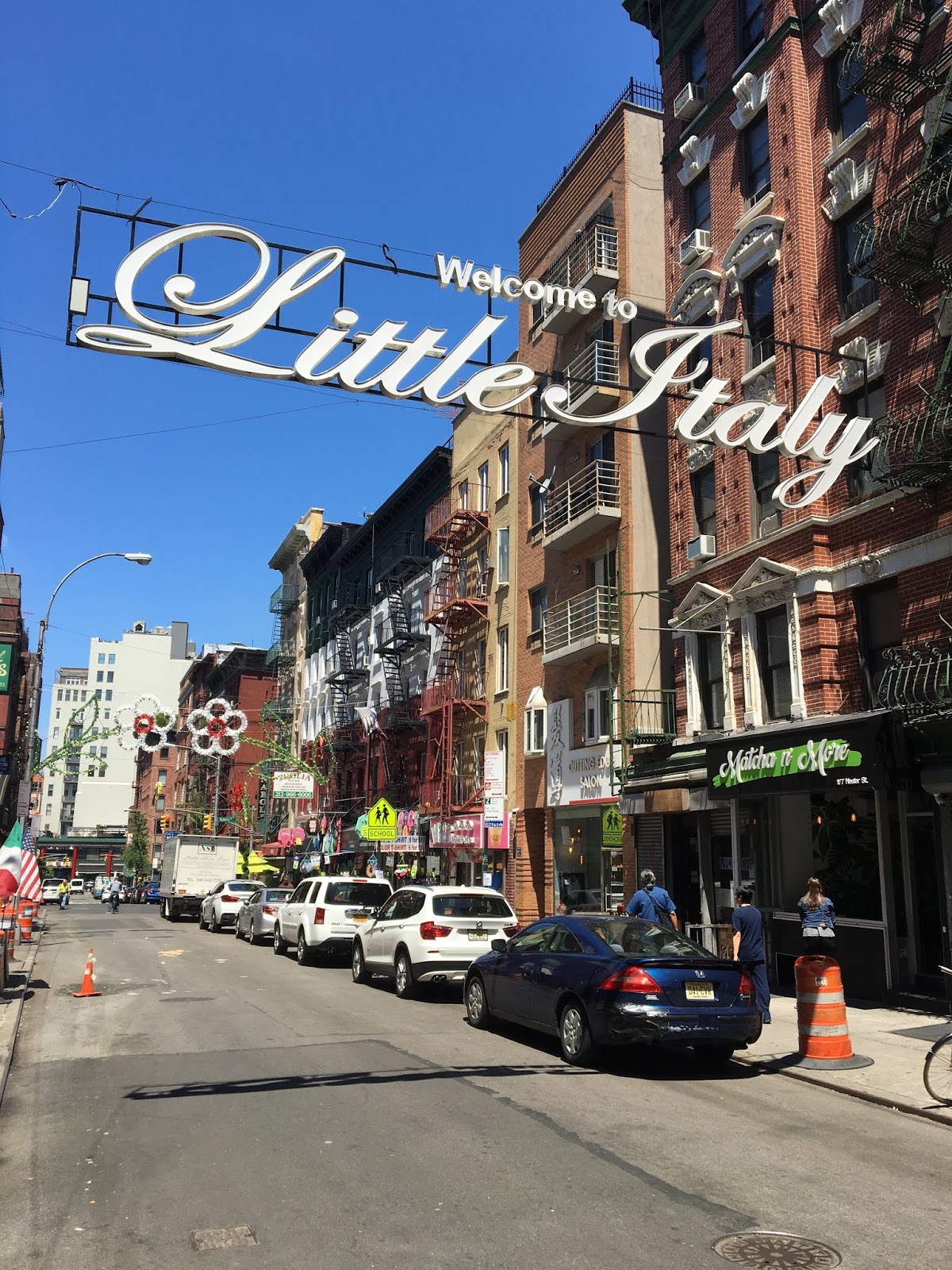
On my last trip to the city, my family decided to book a food tour. Curated by locals, The Ahoy walking tours enable you to delve into the history of a neighbourhood whilst indulging in its specialities. At this point, we knew Upper Manhattan like the back of our hands. But there were two areas that we were yet to explore: Little Italy and Chinatown.

Strolling through Little Italy is like taking a step back in time. Festooned with foliage and pastel hues, the narrow streets are a world away from 5th Avenue. Gone is the glitz, the glamour and myriad Starbucks. In their places are rows of traditional shops and eateries, once home to the Italian families who settled here back in the late 1800s.

Our first stop is a quaint little bakery called Fererra, outside of which the group has already begun to gather. As we approach, we are greeted by our jovial guide Liz who instantly puts us at ease.

First opening its doors in 1892, we learn that Ferrera is one of New York's oldest bakeries. Inside, our eyes are magnetized to the tiers of cakes and pastries, deeply redolent of Alice's tea party. A far cry from the peanut butter and caramel filled creations at Magnolia Bakery, Ferrara's offerings exude authenticity and class. With a flourish, Liz presents us each with one signature cannoli. It is small, cigar shaped and perfect in every way: lightly whipped ricotta, sweetened by a touch of vanilla and cocooned in a crisp pastry shell. I eat mine in three bites and wish I could have a second.


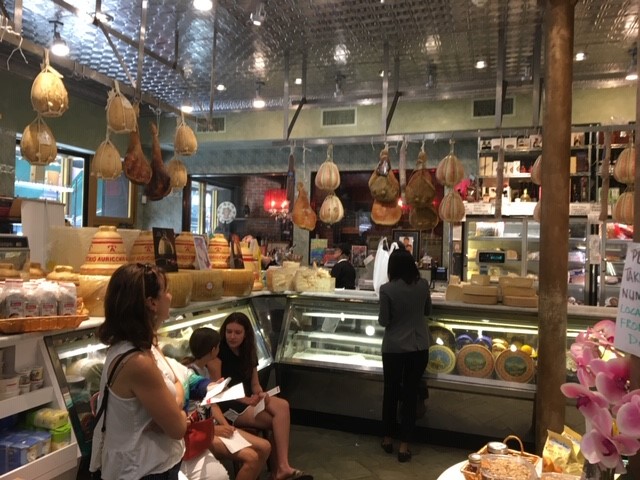
After a short walk, we find ourselves in front of an inviting deli. The windows are adorned with ribbons of brightly-coloured pasta whilst hams hang suspended from the ceiling like valances. At once, we are dazed by a pungent aroma of cheese. Liz distributes plates, loaded with briny olives and mozzarella so smooth you could eat it with a spoon. To finish, we are given ramekin of gnocchi. Coated in a tangy marinara sauce, each ball of gnocchi is fluffy like cotton wool and melts in the mouth.


We leave Little Italy behind and head south to Chinatown. Except for two collosal dragons, the streets and veneers are somewhat understated. However, we quickly learn that its heritage is anything but. Once the most dangerous area in New York, Chinatown's cobbles are riddled with secrets and gruesome stories.


We turn onto Droyers Street and end up on the doorstep of Nom Wah Tea Parlor. Inside, the walls are painted saffron and the tables are draped with gingham cloths. I take a seat at the long communal table and as if by magic, a cup of steaming green tea appears in front of me. While we wait for the food, we chat amongst ourselves like old friends as opposed to strangers.


After about ten minutes, a young waitress arrives, administering bowls and baskets, stacked high with dim sum. Like a kid in a candy store, I reach for an egg roll. In my haste, I burn my tongue, but it tastes so good that I hardly notice. Contrary to your local takeaway, these appetizers are not dripping in grease. The casket of batter is super crunchy and the filling of diced veg packs a zingy punch. Sauce running down my fingers, I bite into a pork bao bun which is pillowy soft and bursting to the seams with glazed meat. But it is the shrimp, snow pea leaf dumplings that are the highlight of the feast. Not stodgy in the slightest, these doughy pockets of shrimp are light as a feather, whilst the grassy notes of snow peas give it a fresh edge. Looking at her watch, Liz regretfully informs us that the tour is coming to a close. And so, our stomachs full, we head outdoors into the sunshine.

Showcasing a marriage of two stunning cuisines, this was the perfect way to share food with family and friends. I would definitely recommend this tour and if you are lucky enough to get Liz as your guide, I can guarantee you are in for a treat.

How the Like Button Triggered Self Hate

Monday, 19 August 2019

in

Hello beauties

Today I wanted to share with you my thoughts on Instagram's recent announcement. Over the last few months, Instagram has undergone a number of changes, including hiding like counts on photos and view counts on videos from other followers. The ongoing trial which is being conducted in six countries around the world, comes after concerns about the link between social media pressures and mental well-being. But is it time we scrapped the heart icon altogether?

As young people, our validation is measured by exam results, the label in our jeans and above all the number of likes on Instagram. Gone are the days when we could snap a selfie just for the sake of sharing. Now, if it isn't ceremoniously Facetuned and fails to hit those all-important double figures, we are deemed ugly, shunned and unworthy of attention.

Personally I think more privacy from followers would reduce the stifling, FOMO fuelled competition. However the issue remains that Instagram is warping our self-esteem. And if users can still access their own metrics, then what is the point?

Ever since Instagram launched, the word like has lost all meaning. It used to be a sign of appreciation and sincerity but now it merely signifies an absent-minded click of a button, sparking a fluctuation between dopamine and self-doubt.

For brands and businesses, likes are an important source of market research. Therefore perhaps the like button should be made exclusively available to these professional accounts. However when it comes to personal users, I honestly don't think it's necessary. One of the reasons why Instagram embarked on this trial was to encourage users to focus more on their content rather than the metrics. In my opinion the only way we can truly achieve that is to disable the like feature on personal accounts. We should be validating one another through positive comments and words, not meaningless numbers.